
|
News travels fast amongst the birdwatching community- bad news even faster. It’s very, very quiet at Cemlyn. Earlier this year and following a run of excellent breeding seasons, North Wales WildlifeTrust with help from the Roseate Tern LIFE Project, installed rafts on Cemlyn lagoon. This was a pro-active measure to encourage Common terns, protect breeding birds against predation and to relieve nest site ‘pressure’ given the continued expansion of the Sandwich Tern colony. Our early optimism for the 2017 breeding season was premature and we are very sad to report that despite a good start, 2017 has been a very difficult year and the terns have abandoned nesting and dispersed. From mid-May onwards, it became obvious that Cemlyn’s lagoon islands were being harassed by otters – a species that just like the terns, benefits from strong legal protection. Initially, the predation targeted black-headed gull nests however, the disturbance and panic created by these predators kept the gulls and the terns off the islands their nests for long periods, often during wet or cold nights. Concerted and prolonged predation of protected species by another protected species presents a complex management dilemma for North Wales WildlifeTrust. 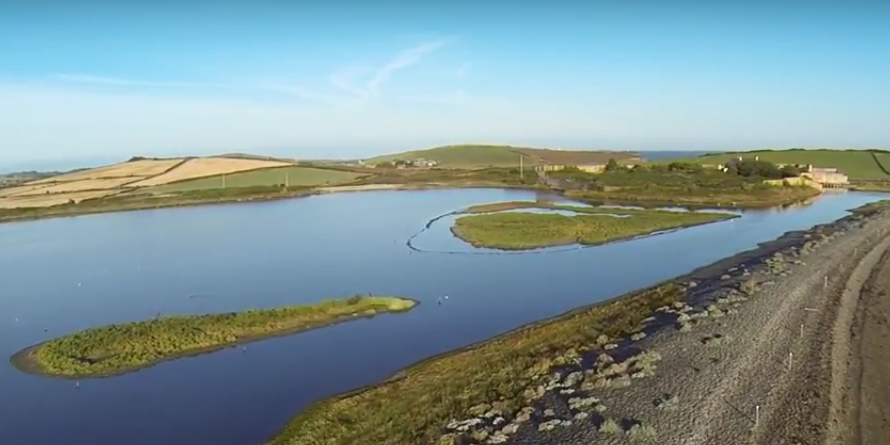 Cemlyn (c) North Wales Wildlife Trust Following discussion with Natural Resources Wales, a number of attempts were made to deter the predators but these were generally unsuccessful. As the breeding season progressed the nesting terns became increasingly unsettled and the many nests that were abandoned created additional opportunities for predation by corvids and the large gulls. The main part of the tern colony was largely abandoned by 17th June however, Common, Arctic and Sandwich Terns continued to try to nest on the smaller island in the lagoon. Despite the erection of a protective fence, these remaining birds subsequently deserted as well. Predation and disturbance by land mammals and birds on such a scale is not a unique event at Cemlyn or other colonies; the last such events at Cemlyn were in 2007 and 2008. Where the main ‘culprits’ were heron and geese. The key thing now, as then, is that North Wales Wildlife Trust anticipate and respond to the threat of predation. Longer term plans and measures for protecting the colony will be put in place before the return of the terns in the Spring of 2018. Working with other organisations with experience of dealing with such issues, we will put in place a series of measures to ensure that the Cemlyn terns get as much protection and the best breeding chances possible; these measures will of course, be appropriately licenced and consented by the Natural Resources Wales as the statutory environmental and species licensing authority. 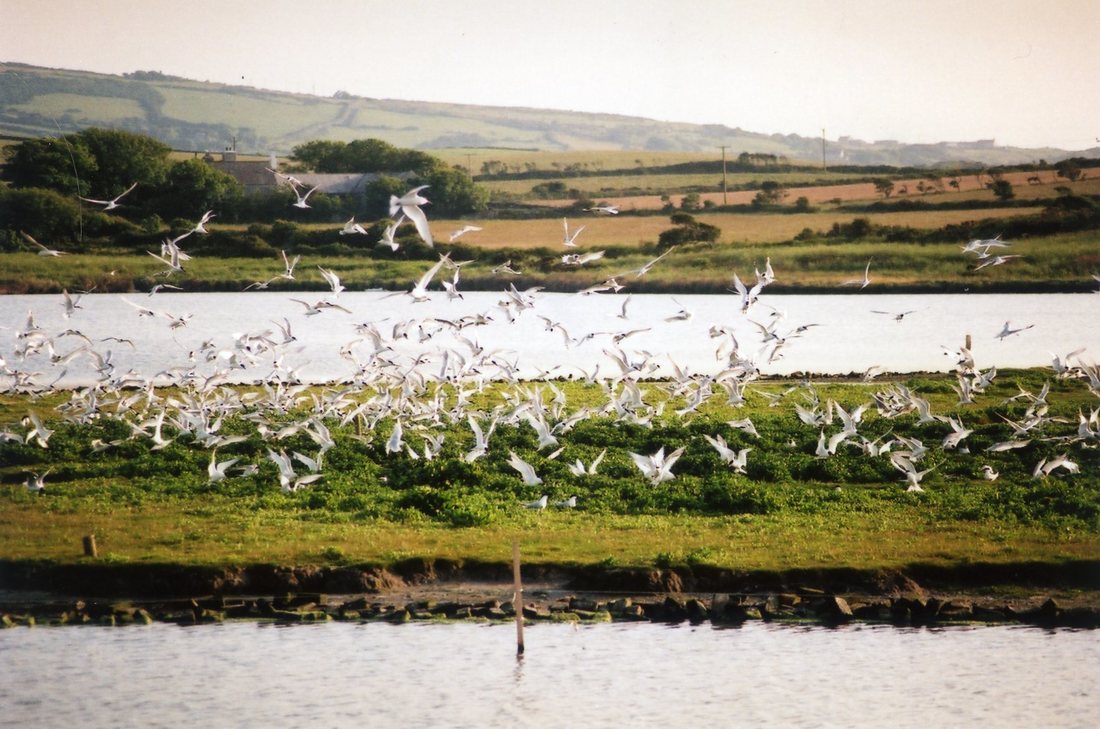 Sandwich terns at Cemlyn (c) North Wales Wildlife Trust Most of the adult terns, having abandoned breeding, are now moulting and have dispersed away from Cemlyn. They continue to take advantage of and feed off the shoals of sandeels and whitebait around Anglesey’s coasts. In the few short weeks of our summer, the small fish stocks around Anglesey’s coasts will give them the strength and nutrition for the long journey south.
We are asking our coastal communities, sea anglers, walkers on the Anglesey Coastal Path and our wildlife watchers to keep an eye out for large flocks of Sandwich terns – it would be interesting to know where they spend time before the long migration south for winter. Guest Blog by Alison - Roseate Tern Community Engagement Officer
0 Comments
Mae newyddion yn trafaelio yn cyflym yn nghymuned yr adarwyr – newyddion drwg hyd yn oed yng hynt. Yn Cemlyn mae hi ‘n dra ddistaw. Yn gynharach eleni ac yn dilyn amrediad o dymhorau bridio gwych, gosodwyd Ymddiriedolaeth Natur Gogledd Cymru, gyda chymorth gan Prosiect LIFE y Môr-wennol wridog, rafftiau ar y lagŵn yng Nghemlyn. Mesur gweithredol oedd hyn i annog y môr-wennol gyffredin, i amddiffyn adar bridio yn erbyn cael eu rheibio ac i leddfu “pwysa” ar y safle nythu gan fod nythfa’r môr-wennoliaid pigddu yn tyfu’n gyson. Cynamserol roedd ein gobeithion cynnar am 2017 ac rydym yn dra siomedig i orfod adrodd, er y cychwyniad da, y bod 2017 wedi bod yn flwyddyn anodd dros ben ac mae’r môr-wennoliaid wedi gadael eu nythod ac wedi gwasgaru. O ganol mis Mai ymlaen, fe ddaeth hi yn amlwg fod yr ynysoedd yn y lagŵn yng Nghemlyn yn cael eu poenydio gan ddyfrgwn – rhywogaeth sydd , fel y môr-wennoliaid, yn elw o amddiffyniad llywodraethol gre. Yn y dechrau targed yr ysglyfaethu oedd nythod y gwylanod penddu ond, fe oedd yr aflonyddwch a’r cynnwrf oedd wedi gael eu creu gan y rheibwyr hyn wedi cadw’r gwylanod ar môr-wennoliaid i ffwrdd o’r ynysoedd a’i nythod am gyfnod maith, yn aml ar nosweithiau gwlyb ac oer. Mae ysglyfaethu cytunedig ac hir dymor o rywogaethau amddiffynnol gan rywogaethau amddiffynnol arall yn creu penbleth rheolaeth cymhleth i Ymddiriedolaeth Natur Gogledd Cymru. 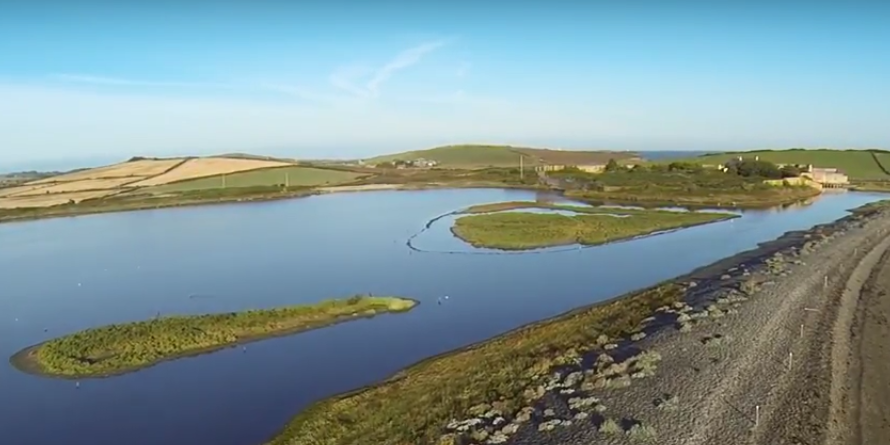 Cemlyn (c) North Wales Wildlife Trust Yn dilyn trafodaethau hefo Cyfoeth Naturiol Cymru, gwneuthum nifer o ymdrechion i rwystro y rheibwyr ond ar y cyfan profodd rhain yn aflwyddiannus. Fel aeth y tymor bridio yn ei flaen fe aflonyddodd y môr-wennoliaid yn fwy-fwy ac fe grëwyd y nifer y nythod gweigion ragor o gyfleodd o reibio gan frain a gwylanod mawr. Cafwyd y rhan fwyaf o’r prif ddarn y cytref môr-wennoliaid ei adael erbyn 17ain o Fehefin ond, fe ymdrechodd môr-wennoliaid cyffredin, y Gogledd a’r bigddu nythu ar yr ynys leiaf yn y lagŵn. Er bod yna ffens wedi eu chodi i amddiffyn yr adar, yn y diwedd fe adawodd yr adar hyn hefyd . Nid yw rheibio ac aflonyddwch gan famaliaid y tir ac adar ar ffasiwn raddfa mor unigryw yng Nghemlyn neu gytrefi eraill; y digwyddiadau tebyg blaenorol yng Nghemlyn oedd yn 2007 a 2008. Yr adeg hyn y prif “droseddwyr” oedd crehyrod a gwyddau. Y peth pwysig nawr, fel yr oedd adeg hynny, y dylid Ymddiriedolaeth Natur Gogledd Cymru ragweld ac ymateb i’r bygythiad o reibio. Fe fydd cynlluniau a mesuriadau hir dymor i amddiffyn y cytref mewn lle cyn i’r môr-wennoliaid ddychwelyd yn y Gwanwyn o 2018. Drwy gyd-weithio hefo mudiadau eraill gyda phrofiadau yn y maes hyn, fe fyddem yn gosod cyfres o fesurau mewn llaw er mwyn sicrhau y bydd môr-wennoliaid Cemlyn yn cael cyn gymaint o amddiffyniad ar siawns gorau o fridio a sydd bosib; wrth gwrs fe fydd y mesurau hyn yn cael eu trwyddedu’n briodol ac wedi eu caniatáu gan Gyfoeth Natur Cymru fel y awdurdod statudol amgylcheddol a trwyddedu rhywogaeth . 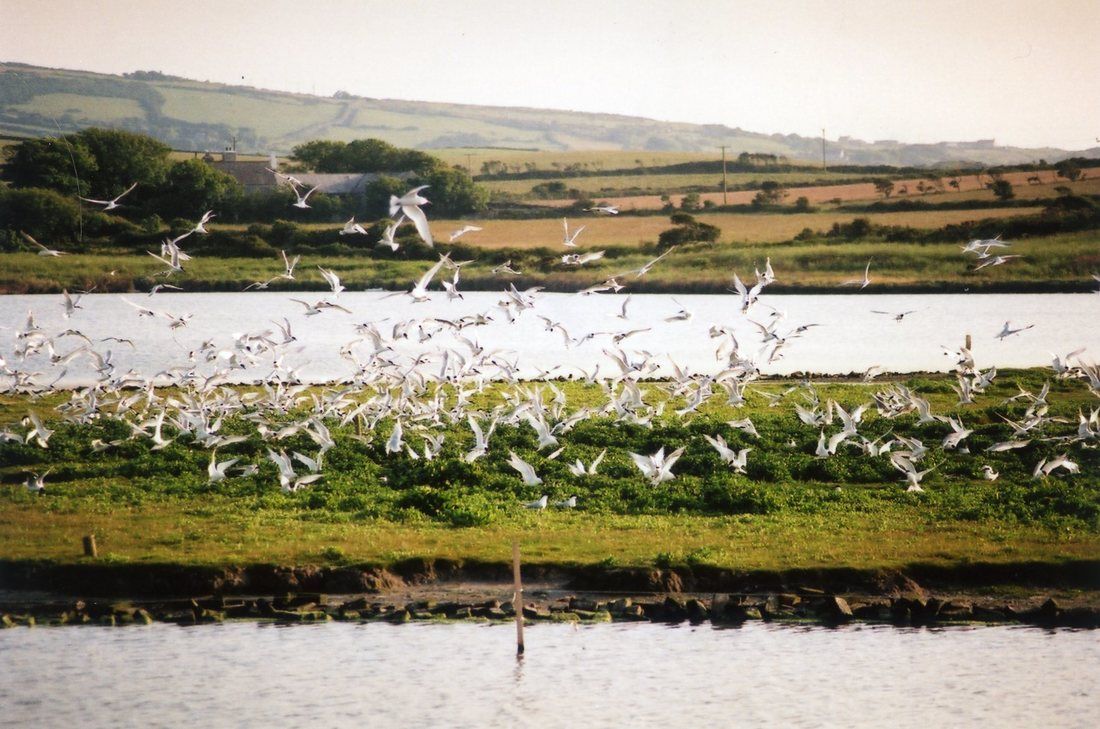 Sandwich terns at Cemlyn (c) North Wales Wildlife Trust Wedi rhoi gorau i fridio mae oedolion y môr-wennoliaid nawr yn bwrw eu plu ac wedi symud i ffwrdd o Gemlyn . Maent yn parhau i fwydo ar y heigiau o lymrïaid a silod mân o gwmpas arfordiroedd Ynys Môn. Yn yr wythnosau byr o’n Haf, mae’r nifer o bysgod o gwmpas arfordiroedd Ynys Môn yn rhoi nerth a maeth iddynt am y siwrnai hir i’r De.
Rydym yn gofyn i’n cymunedau arfordirol, pysgotwyr môr, cerddwyr ar Lwybr Arfordirol Môn a ein gwylwyr bywyd gwyllt gadw golwg allan am heidiau o fôr-wennoliaid pigddu – diddorol fydd gwybod ym mhle maent yn treulio amser cyn iddynt fudo i’r de am y gaeaf. Guest Blog by Alison - Swyddog Cymunedol y Môr-wennol gwridog The harsh weather is one of the main causes for nest failure for ground nesting birds such as little terns, roseate terns and ringed plovers; however other causes include predators of which the results can be just as destructive. Last week, 40 conservation driven individuals braved Storm Doris and travelled to North Norfolk to attend a Predator Management Workshop jointly organised by the LIFE+ Little Tern Recovery Project and the Roseate Tern LIFE Recovery Project. The two-day event covered a range of topics, which included sharing success stories and management practices along with some very good discussions. By exchanging knowledge and experiences especially between multiple organisations, we can potentially propose new solutions and will return to our sites/offices with a renewed enthusiasm in protecting these vulnerable nesting birds. 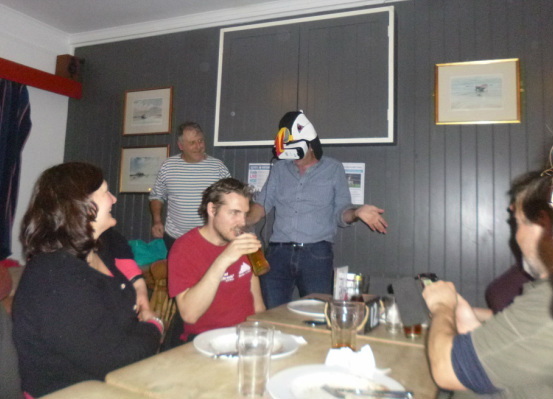 It wasn’t all serious, with a chance over dinner, to try out the Virtual Reality headset showing 360’ of Coquet Island and ‘see’ puffins that you can almost touch! Participants came from a wide number of organisations such as Natural England, National Trust, RSPB, Lincolnshire Wildlife Trust, Isle of Man Government, Sussex Wildlife Trust, Holkham Estate, Denbighshire County Council and Norfolk Wildlife Trust. Thank you to all who attended. 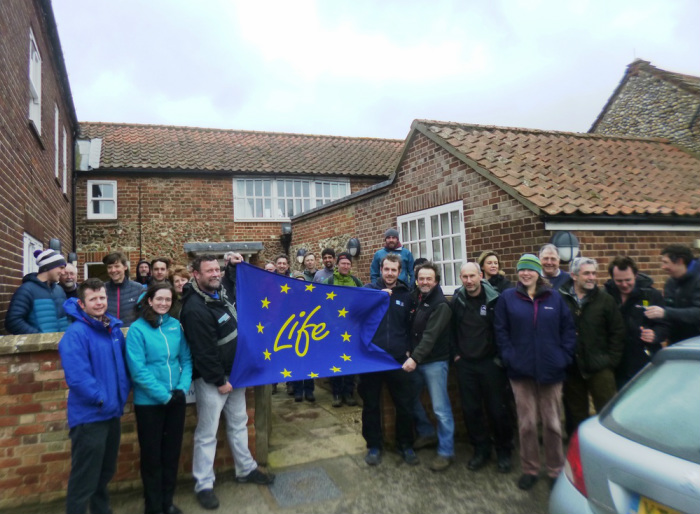 'Alone we can do so little, together we can do so much' Helen Keller For more information on the LIFE+ Little Tern Recovery Project, check out their website: http://www.littleternproject.org.uk/
Photo credits: Susan Rendell-Read |


More Blogs to Read
AuthorThis blog is maintained by various people from the project team. Archives
August 2020
Categories
All
|
 RSS Feed
Roseate Tern LIFE Project is supported by the LIFE Programme of the European Union
LIFE14 NAT/UK/000394 ROSEATE TERN
LIFE14 NAT/UK/000394 ROSEATE TERN